Finding a Job You Love Has Never Been Easier

Finding a Job You Love Has Never Been Easier

Everything you need to know to start your healthcare job search with StaffDNA®

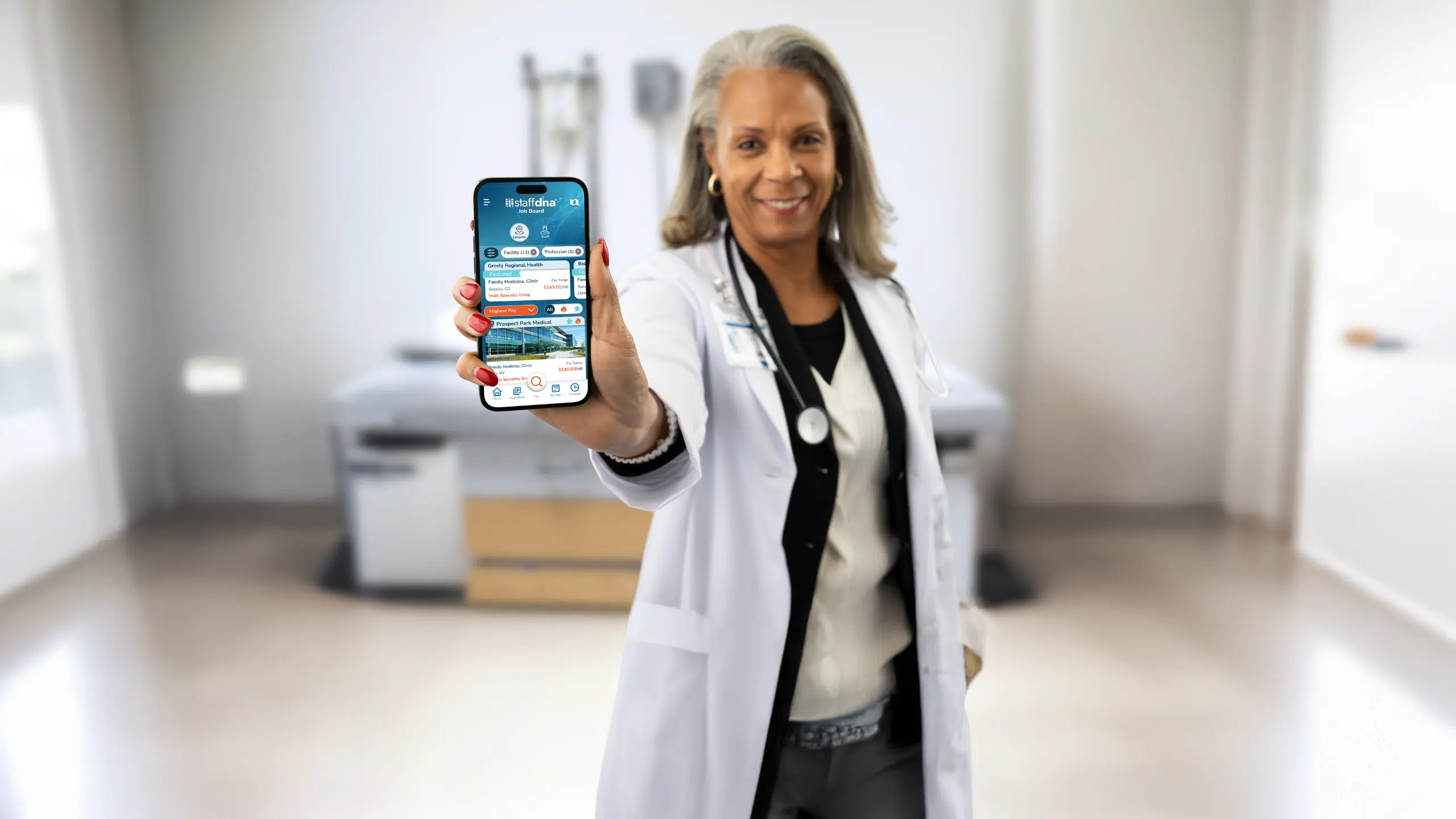
The time has come to make finding a job as easy as possible. If you’re in healthcare, you know that the industry faces a growing demand for qualified professionals, and candidates are competing for the highest-paying jobs. The technology behind the StaffDNA digital marketplace connects job seekers with hiring facilities through an innovative and user-friendly app. Unlike traditional staffing agencies that require multiple calls and emails, StaffDNA offers a streamlined approach where users can browse thousands of positions across various employment types from their phones.

Creating a five-minute profile unlocks the platform’s full potential by storing credentials, licenses and references. Through its seven-step profile creation process, StaffDNA offers healthcare professionals immediate access to the highest-paying roles in healthcare.

What’s more, StaffDNA offers complete transparency for every job listed in its marketplace, including pay rates, job details, and application status. Having all the information you need in one place significantly reduces application time while granting workers more control over their job search. By eliminating hidden negotiations and putting candidates and facilities in direct touch with one another, StaffDNA empowers job seekers to search, apply and get hired for positions more efficiently than traditional job-seeking methods.

Your Profile

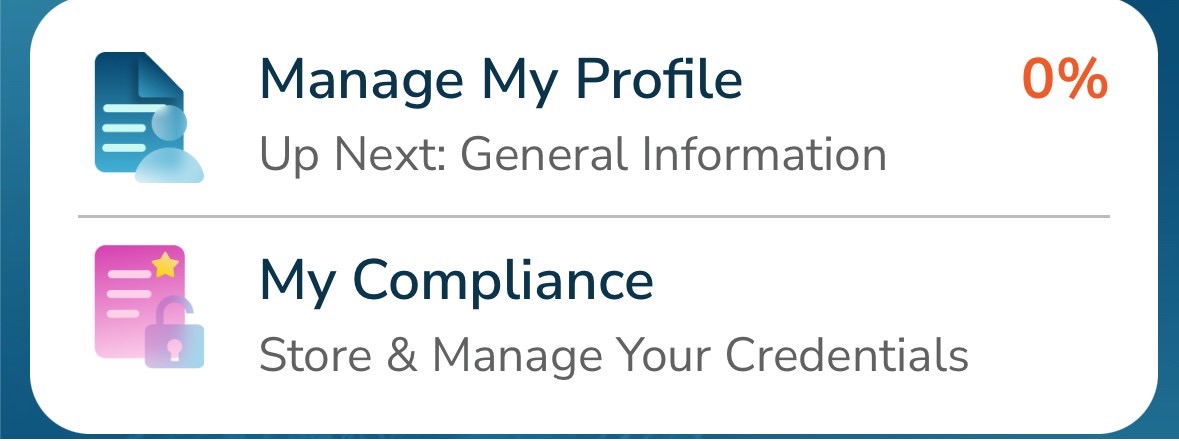
To apply for a position with StaffDNA, complete your profile. Once you log in or sign up, select “Manage My Profile” to do so.
SDNA

The profile setup includes seven easy steps. By completing these steps, you’ll ensure you have everything you need when applying. What’s more, finishing these steps will increase your chances of getting hired!

Step 1: General information
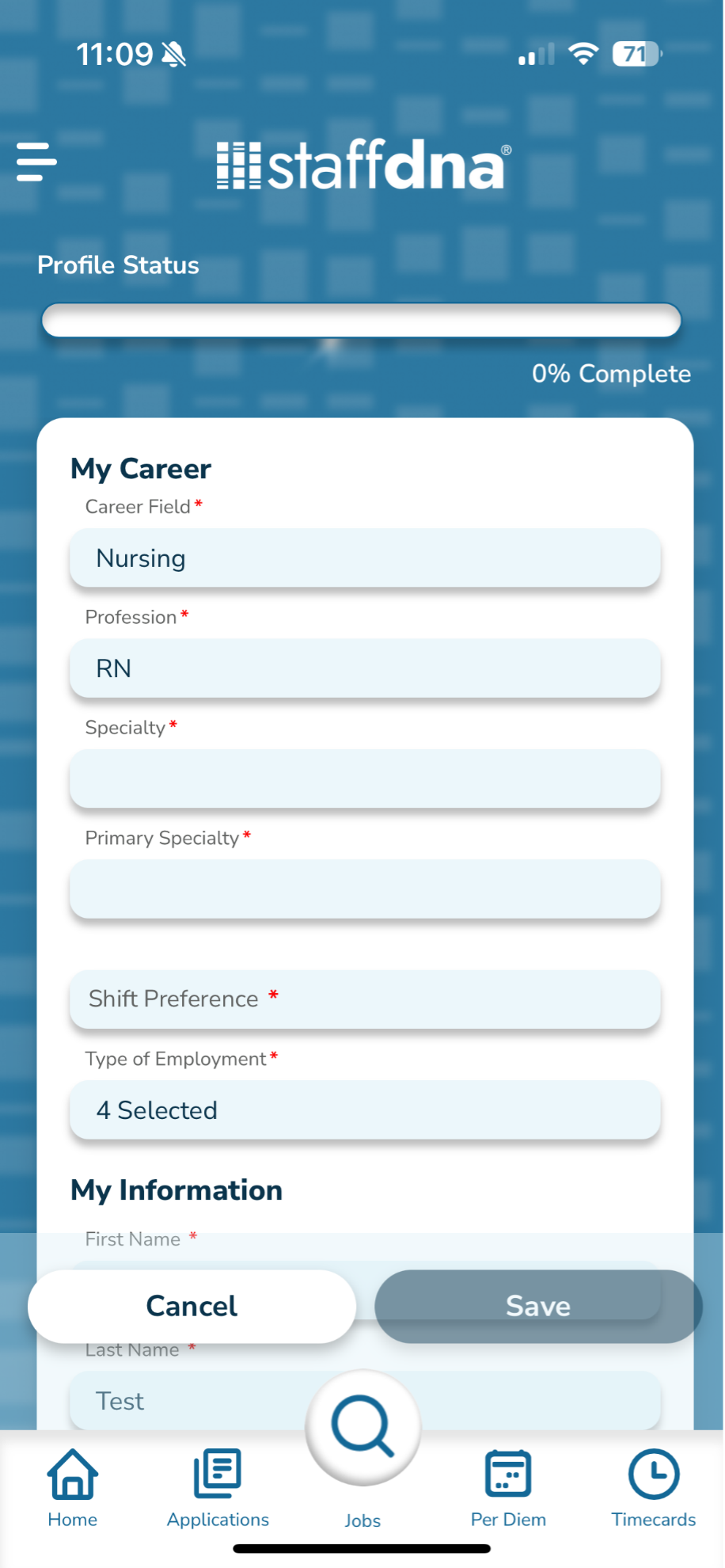
General Information page insife the StaffDNA mobile app


This step involves filling out basic information about yourself, including your name, email, phone number, and address.

Additionally, you’ll identify your preferences, such as your preferred shift type, job type and desired start date. Here, you can also select your experience as it pertains to charting systems, equipment you’ve worked with and procedures you have experience with.

Step 2: Resume
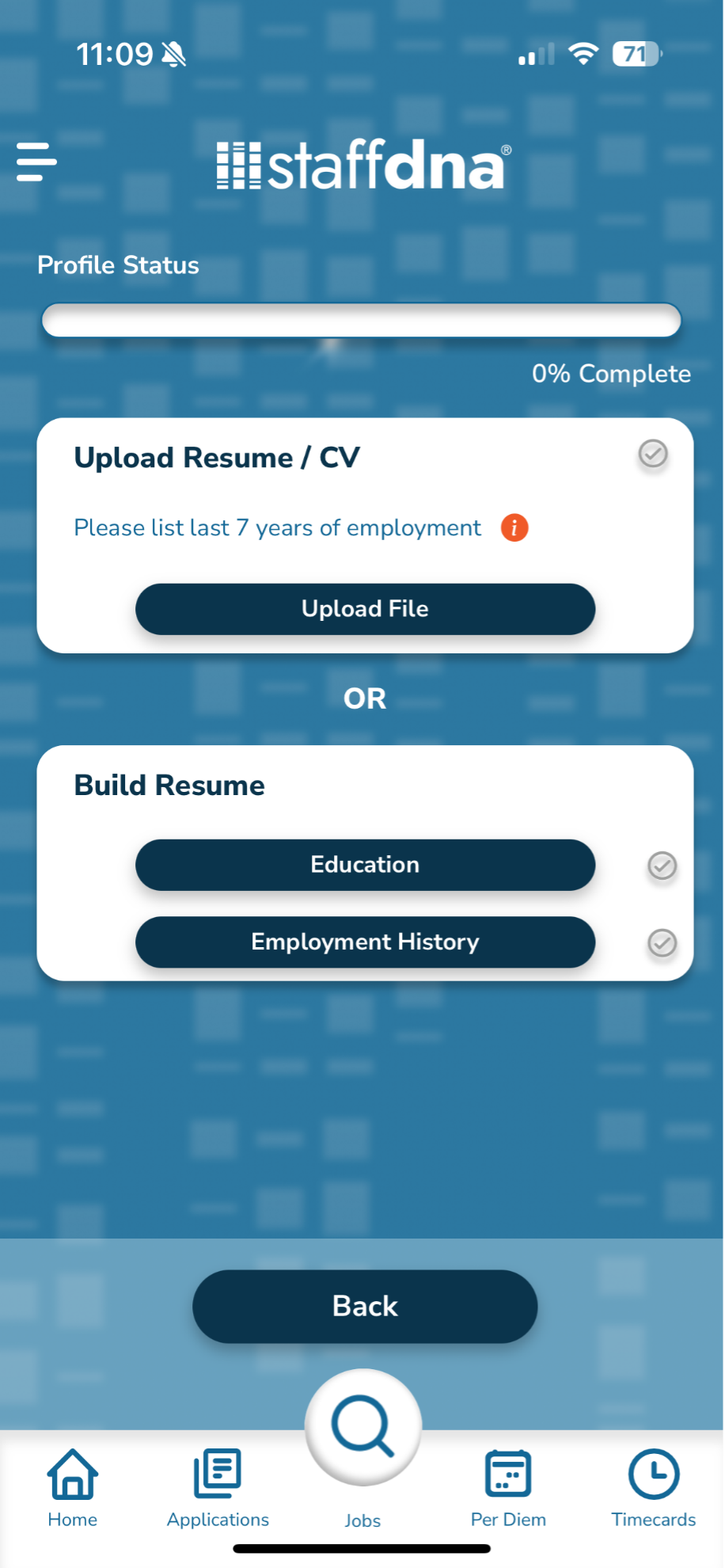
Resume section within the StaffDNA mobile app

After completing your general information, you will be prompted to submit your resume. Through the StaffDNA app, you can either upload your own resume or create one instantly. When filling out your resume, please provide your employment history for the last seven years. This ensures you meet the experience and qualifications for the jobs you apply for.

Step 3: Credentials
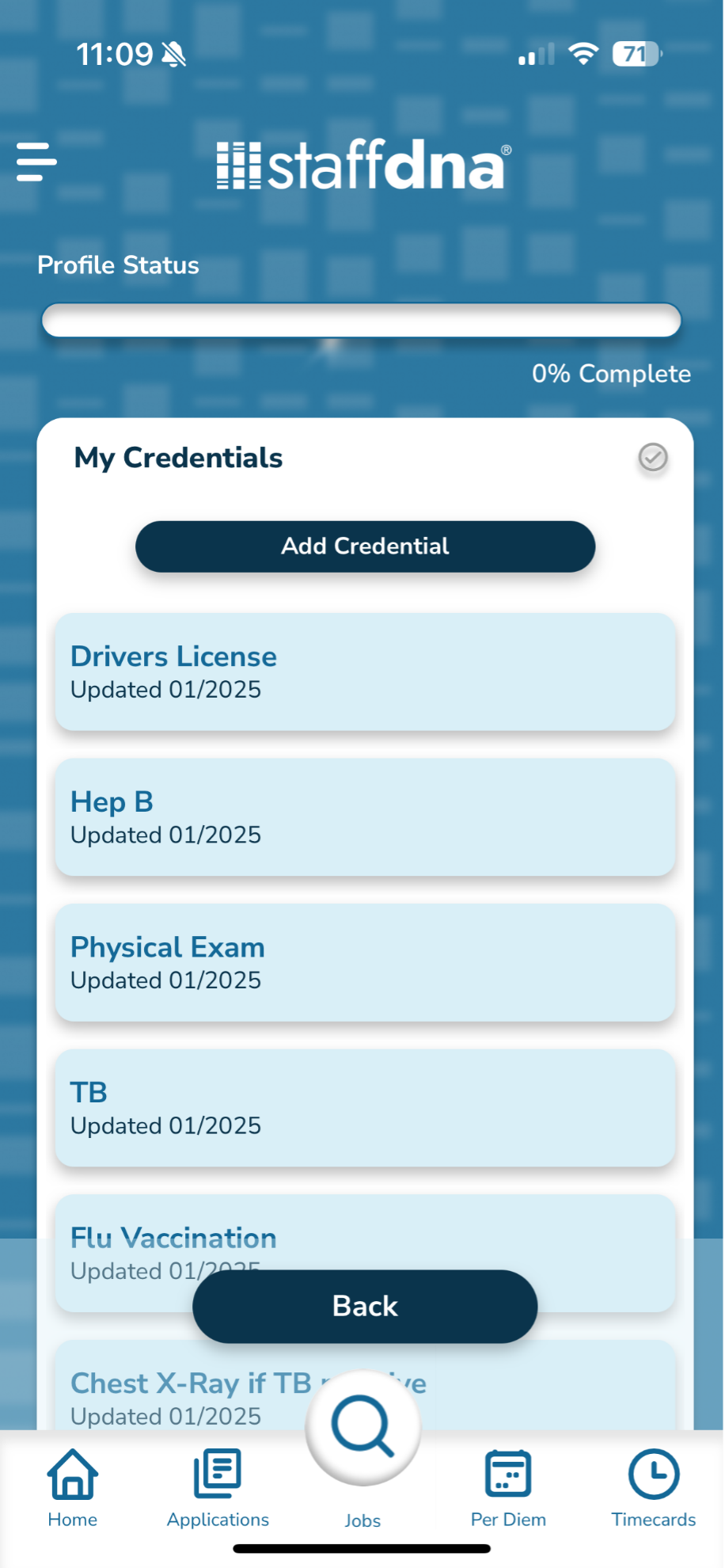
Credentials section of ther StaffDNA mobile app

The next step is to add your credentials. This includes uploading your driver’s license, physical exam and vaccines for the flu, Hepatitis B and TB.

Any other credentials you have, such as an ABLS or CPAN, should be uploaded here. This will ensure that if you find a job you want to apply for, there will be no delays and you’ll be good to go after you hit “apply.”

Step 4: License(s)
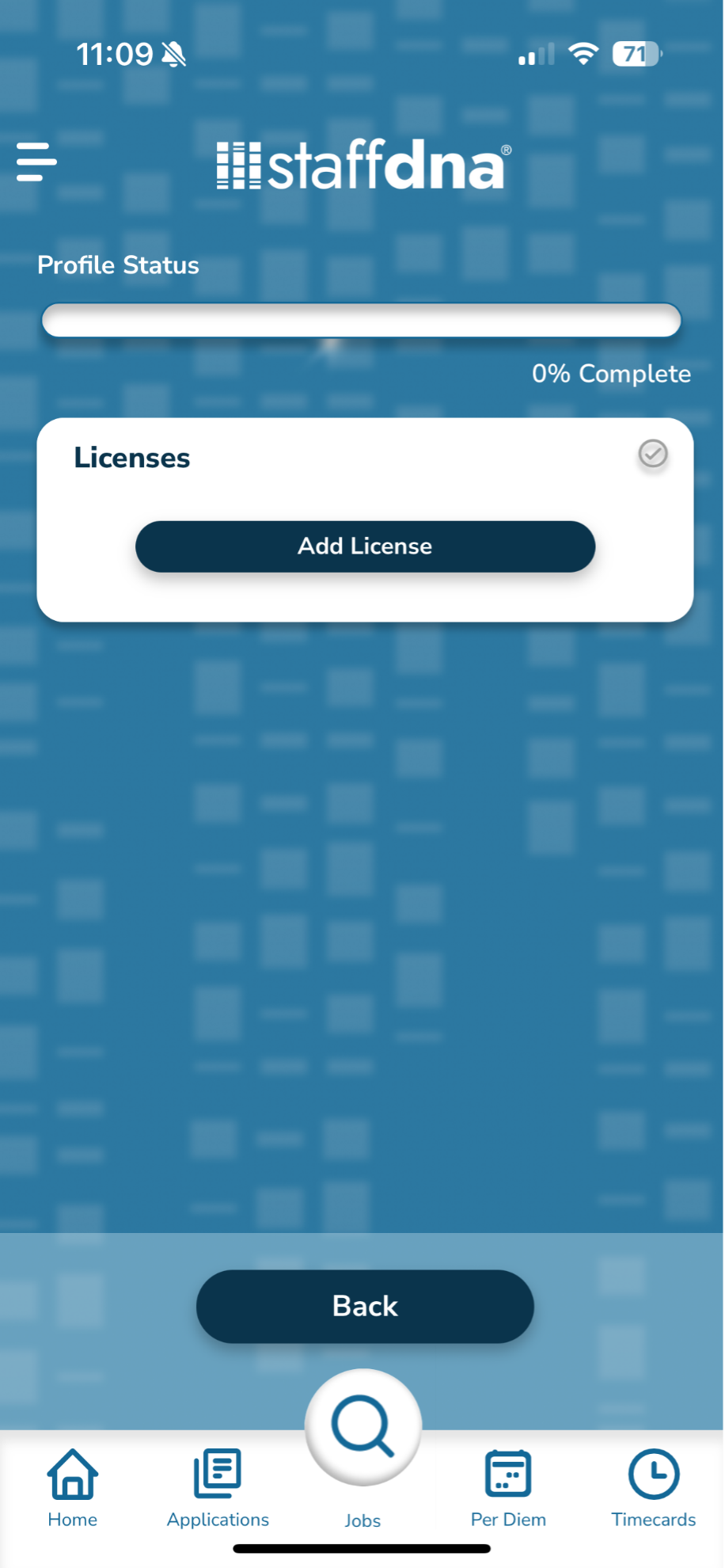
License section of the StaffDNA mobile app

After uploading your general information, resume and any credential documents, you must upload your license. When you submit either a file or screenshot of your license, please make your profession (such as RN), state, license number and expiration date clearly visible.

Step 5: References
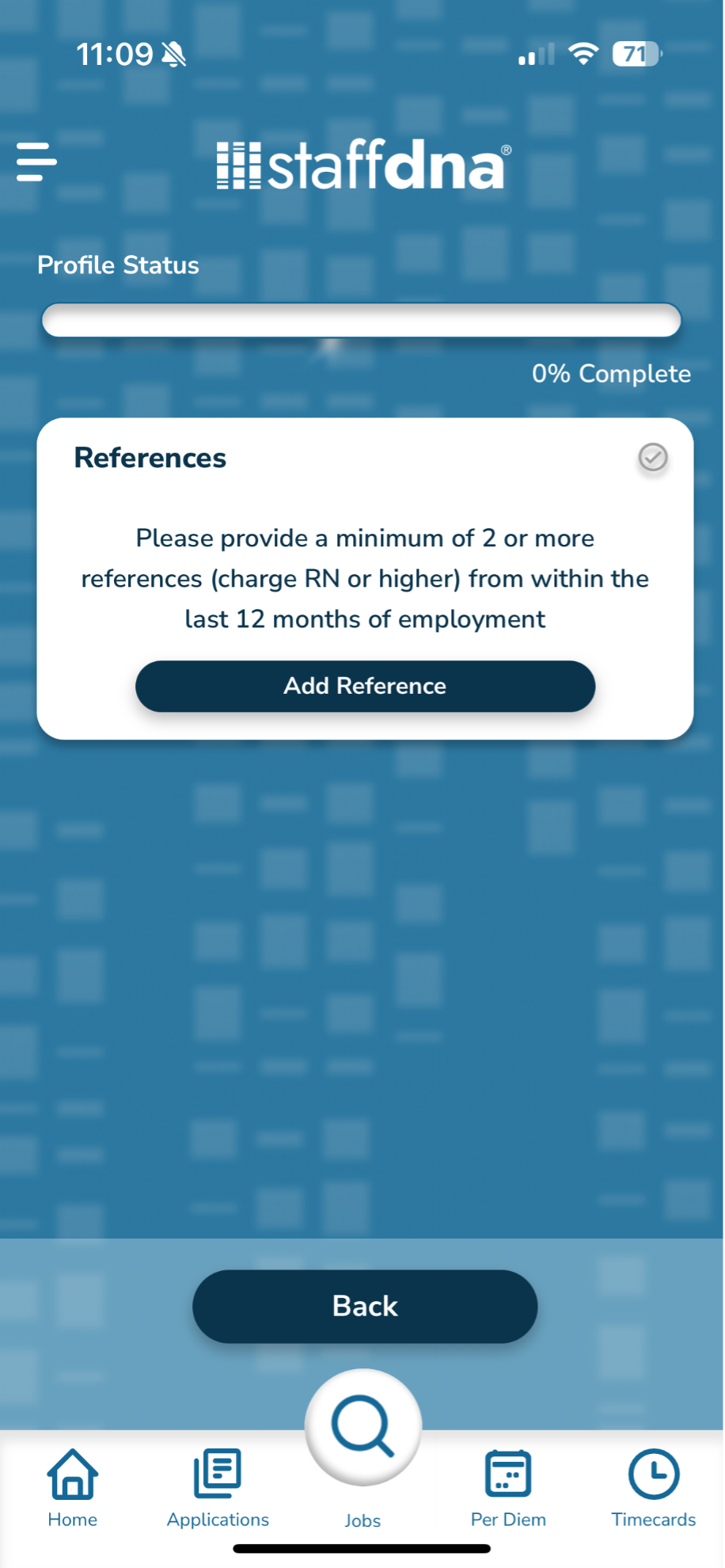
Picture of the references section of the StaffDNA mobile app


Next, you will be prompted to add your references. StaffDNA requires at least two references from the past 12 months of employment. Adding them now will help prevent any delays between your interview and a potential offer.

Step 6: Skills checklist
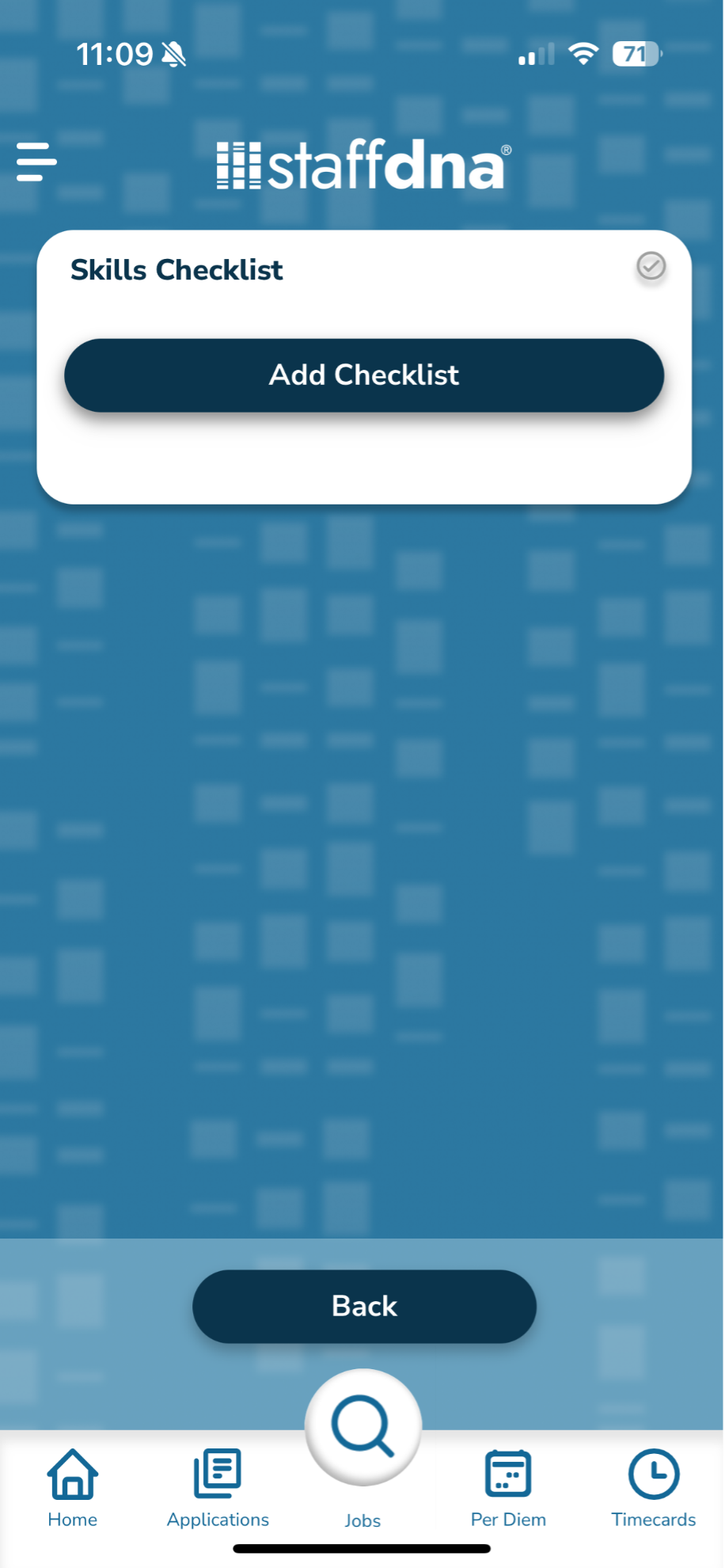
Picture of the skills checklist section of the StaffDNA mobile app


You’re almost done! The second-to-last step is to complete a detailed checklist. Depending on your chosen specialty or subspecialty, you’ll need to assess yourself regarding your experience and frequency with various skills. This includes your capabilities related to patient care, medications, procedures, equipment, and age-specific competence.

You’ll be asked to rank your experience and frequency of each skill on a scale of one to four.

Experience:

Frequency:

1: Trainee – no experience

1. None, only observed others

2: Beginner – need assistance

2. Less than six times per year

3: Experienced – work independently

3. One to two times per month

4: Proficient – can serve as a guide

4. Daily or weekly


Step 7: Complete & sign

Complete and sign page in StaffDNA mobile app


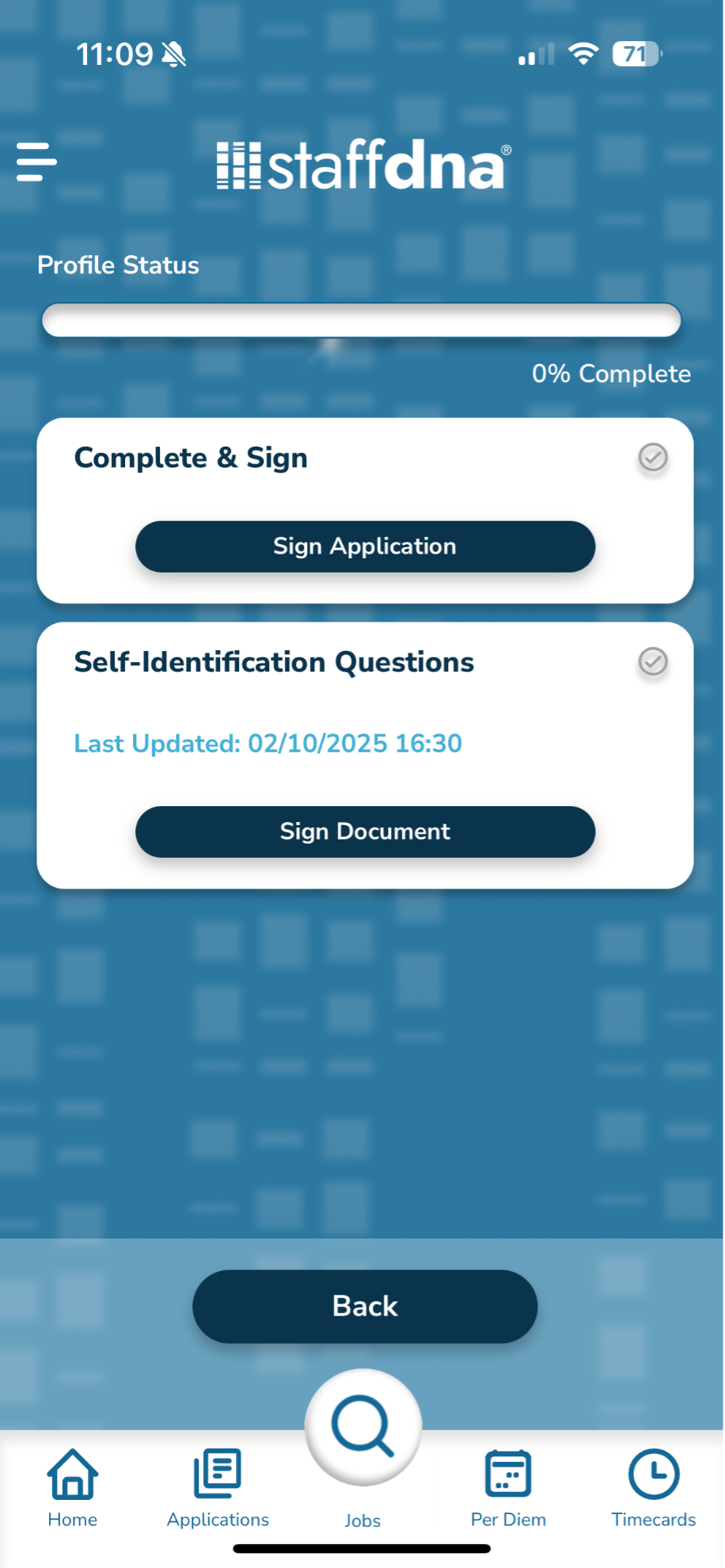
Once you have completed the above, you need only sign the application, confirming that all the information you provided is correct and true to the best of your knowledge. After this, your profile is complete and you can apply for any job you want!

The StaffDNA Difference

The difference between StaffDNA and other staffing agencies is our technology. Once you upload everything, it’s stored in one convenient place—your profile. While others need to use a website or a portfolio to showcase their work and skill set, yours is all in your profile. Your profile will then help our AI-driven technology to accurately match you with the right fit in your job search.

By removing the middleman and automating the hiring process, StaffDNA is revolutionizing healthcare staffing. With complete autonomy, all your documents in one place, and access to full pay and job detail transparency, why hesitate? Download the app today and see how technology can change how you discover and apply for the highest-paying healthcare jobs.

Woman with long, wavy hair.

Jessica Louque

Candidate Application

Check out these other great StaffDNA articles

Insights blog Gear Hero Image

Must-Have Gear for Healthcare Professionals: The Essential Items That Make Every Shift Better

Step into any hospital break room and you’ll observe something immediately: clinical professionals are always on the move. Nurses, doctors, radiology technicians, respiratory therapists, and so many others cover miles walking their shift, endure brutal 12-hour marathons, and juggle patient care with the physical demands of the job. When you’re this busy, having the right gear becomes necessary, not a luxury.

Read More »

Healthcare organizations face some of the toughest workforce challenges: tight budgets, lean IT teams and limited tools for sourcing, hiring and onboarding staff. Add in manual scheduling, rising labor costs and high burnout, and the pressure grows. Rolling out complex systems can feel out of reach without dedicated tech support. Even simply evaluating new technology can overwhelm already stretched-thin teams.

These challenges make it clear that technology isn’t just helpful; it’s essential for healthcare organizations. Especially when they’re striving to do more with less. Not only are healthcare organizations falling short on implementing new technology, but they’re struggling to update outdated systems. A 2023 CHIME survey found that nearly 60% of hospitals use core IT systems, such as EHRs and workforce platforms, that are over a decade old. Outdated tools can’t integrate or scale, creating barriers to smarter staffing strategies. But the opportunity to modernize is real and urgent.

Tech in Patient Care Falls Short

In healthcare, technology has historically focused on clinical and patient care. Workforce management tools have taken a back seat to updating patient care systems. Yet many big tech companies have failed when it comes to customizing healthcare infrastructure and connecting patients with providers. Google Health shuttered after only three years, and Amazon’s Haven Health was intended to disrupt healthcare and health insurance but disbanded three years later.

Why the failures? It’s estimated that nearly 80% of patient data technology systems must use to create alignment is unstructured and trapped in data silos. Integration issues naturally form when there’s a lack of cohesive data that systems can share and use. Privacy considerations surrounding patient data are a challenge, as well. Across the healthcare continuum, federal and state healthcare data laws hinder how seamlessly technology can integrate with existing systems.

Why Smarter Staffing Is Now Essential

These data and integration challenges also hinder a healthcare organization’s ability to hire and deploy staff, an urgent healthcare priority. The U.S. will face a shortfall of over 3.2 million healthcare workers by 2026. At the same time, aging populations and rising chronic conditions are straining teams already stretched thin.

Smart workforce technology is becoming not just helpful, but essential. It allows organizations to move from reactive staffing to proactive workforce planning that can adapt to real-world care demands.

Global Inspiration: Japan’s AI-Driven Workforce Model

Healthcare staffing shortages aren’t just a U.S. problem. So, how are other countries addressing this issue? Countries like Japan are demonstrating what’s possible when technology is utilized not just to supplement staff, but to transform the entire workforce model. With one of the world’s oldest populations and a significant clinician shortage, Japan has adopted a proactive approach through its Healthcare AI and Robotics Center, where several institutions like Waseda University and Tokyo’s Cancer Institute Hospital are focusing on developing AI-powered hospitals.

Japan’s focus on integrating predictive analytics, robotics and data-driven scheduling across elder care and hospital systems is a response to its aging population and workforce shortages. From robotic assistants to AI-supported shift planning, Japan’s futuristic model proves that holistic tech integration, not piecemeal upgrades, creates sustainable staffing frameworks.

Rather than treating workforce tech as an IT patch for broken systems, Japan’s approach embeds these tools throughout care operations, supporting scheduling, monitoring, compliance and even direct caregiving tasks. U.S. health systems can draw critical lessons here: strategic investment in integrated platforms builds resilience, especially in a labor-constrained future.

The Power of Smart Workforce Technology

In the U.S., workforce management is becoming increasingly seen as more than a back-office function; it’s a strategic business operation directly impacting clinical outcomes and patient satisfaction. Smart technology tools are designed to improve care quality, staff satisfaction, scheduling, pay rates, compliance and much more.

For example, by using historical data, patient acuity, seasonal trends and other data points, organizations can predict their staff needs more accurately. The result is fewer gaps in scheduling, fewer overtime payouts and a flexible schedule for staff. AI-powered analytics can help healthcare leadership teams spot patterns in absenteeism, see productivity and forecast needs in multiple clinical areas in real-time. Workforce management tools can help plan scheduling proactively, rather than reactively. It’s a proven technology tool that can help drive efficiency and reduce costs.

Why So Many Are Still Behind

Despite the clear benefits, many healthcare organizations are slow to adopt smart tools that empower their workforce. Several things are holding them back from going all-in on technology:

Financial Pressures

Over half of U.S. hospitals are operating at or below break-even margins. For them, investing in new technology solutions is financially unfeasible. Scalable, subscription-based and even free workforce management tools are available, but most organizations are unaware of or lack the resources to source these products. Workforce management tools can deliver long-term return on investment for most organizations. Taking the time to understand where the value lies and which tools to invest in needs to happen.

Outdated Core Systems

Many facilities still depend on legacy technology infrastructure that lacks real-time capabilities. Many large players in the healthcare workforce management industry dominate hospital systems. Other smaller, real-time tools that offer innovative solutions to scheduling, workforce hiring, rate calculators and more are available at a fraction of the cost.

Competing Priorities and Strategic Blind Spots

Healthcare organizations and hospitals have many high-priority business objectives and regulatory demands. Digital transformation naturally falls down on the priority list, which causes them to miss improvements that can lead to long-term stability. With patient care and provider satisfaction at the top of the priority mountain, technology changes can be easily missed or shoved to the side when other business objectives are perceived to “move the needle” more.

Poor Change Management

Even the best technology efforts can fail without the right strategy for adoption and support from senior leadership. Resistance from staff, lack of training, or poor rollout communication can undermine success. Effective change management—clear leadership, role-based training and feedback loops—is essential.

Faster than the speed of technology

Change needs to come quickly to healthcare organizations in terms of managing their workforce efficiently. Smart technologies like predictive analytics, AI-assisted scheduling and mobile platforms will define this next era. These tools don’t just optimize operations but empower workers and elevate care quality.

Slow technology adoption continues to hold back the full potential of the healthcare ecosystem. Japan again offers a clear example: they had one of the slowest adoption rates of remote workers (19% of companies offered remote work) in 2019. Within just three weeks of the crisis, their remote work population doubled (49%), proving that technological transformation can happen fast when urgency strikes. The lesson is clear: healthcare organizations need to modernize faster for the sake of their workforce and the patients who rely on providers to deliver care.


Share On

Facebook
LinkedIn
WhatsApp
X
Email

Check out StaffDNA Insights